
You open your laptop, set your priorities, and start your workday. Everything is running smoothly, and you feel like you've got a productive day ahead of you. Then your phone calls with a message. Four emails arrive in quick succession. And you take a "brief" look at your social media feed. Before you know it, the day is over. And with just a few ticked items on your to-do list, you're wondering, "Why am I so easily distracted?"
You're not alone if you get distracted every now and then. According to a Harvard study, people spend an average of 47% of their time thinking about something else. And in the office, a typical office worker is interrupted or changes tasks every three minutes. Since it can take over 23 minutes to regain focus after a distraction, this leads to torn workdays.
The consequences are far-reaching: distractions make it difficult to stay focused, get into deep work, and be productive. If you don't do anything about your distractions, your success will suffer in the end.
Let's take a look at why you get easily distracted – and what tips help limit distractions.
Why am I so easily distracted? Possible explanations
There is no one-size-fits-all answer to why people get distracted. Reasons differ from person to person, from day to day, and even from moment to moment. Some distractions are internal, while others are external.
Inner distractions
Inner distractions are your own thoughts and feelings. Maybe you're dealing with an important private issue, task, or problem that needs to be solved. Or maybe you're worried about money, relationships, career—ironically, even productivity. Such thought loops pull you away from the task at hand.
Examples of internal distractions:
- Stress. Stress around a certain topic is not only emotionally stressful, but also eats up time. Whether it's work-related or private, stress draws your attention away and reduces your productivity.
- Exhaustion. If you are tired, it is difficult to concentrate. A study by the University of Pennsylvania School of Medicine shows how hard it is to maintain cognitive performance when fatigue occurs. A healthy, regular sleep schedule is crucial for productivity.
- Hunger. Your brain needs a balanced diet to function optimally. Without the right supply of nutrients, it is difficult to make decisions and solve problems; Fatigue and "brain fog" are the result. Take good care of your body – an alert, satisfied brain thanks it with high-quality work.
- Illness. If you're not fit, you can hardly focus. As important as work may be, your health is more important. In case of illness, give yourself the necessary time to fully recover.
- Mental health. Certain conditions such as depression, anxiety disorders, ADHD or obsessive-compulsive disorder can make it difficult to concentrate. Seek support from friends, family, executives or therapists if you realize that you can no longer do it alone.
 Image: Christian Erfurt
External distractions
External distractions come from the outside. Technology often plays a big role here, but certain work environments can also be distracting.
The main culprits include:
- Technology. Smartphones, social media, games, online shopping and streaming platforms quickly devour hours. You must consciously manage these time-wasters so that they do not torpedo your work.
- Working environment. Colleagues, regular meetings and an endless flood of emails are often distracting in the office. Even if you're working asynchronously, the constant ping of notifications can be hugely annoying. Be aware of these factors and set clear boundaries in your day-to-day work to stay focused.
- Family. If you are responsible for children or other relatives, you have to coordinate appointments and take care of them - this can prevent you from working.
- Background noise. Some work well with soft music, others find music and sounds very disturbing. Create a quiet working environment where possible.
Maximize productivity: 8 tips against distractions
Luckily, there are a few things you can do if you get easily distracted.
At the beginning of each workday, plan how you'll prioritize, eliminate distractions, stay on task, and end the day feeling good. These tips will help you do just that.
Tip 1: Put your smartphone in airplane mode
Your smartphone is probably one of the biggest distractions. A study shows that Americans check their cell phones an average of 80 times a day. A good part of this falls during working hours.
One of the reasons why notifications are fun: they provide a little dopamine kick and promise something more exciting than the task at hand. A quick glance at the screen or a swipe is all it takes – but these micro-distractions add up and cost attention, focus and time.
Airplane mode gives you the digital peace and quiet you need to focus on your work. If this all-or-nothing approach is too drastic for you and you don't want to miss important calls or messages, at least turn off push notifications. Picking up your phone when you want it – and not when it calls you – has a liberating effect.
 Picture: Malte Helmhold
Tip 2: Don't check emails all the time
Constant checking of e-mails often seems productive and indispensable.
Isn't it.
Looking at your inbox every time an email arrives lowers your productivity and prevents you from completing important tasks. A study showed that those who check e-mails only three times a day – instead of an average of 15 times – feel less stressed and have achieved more.
Close your mail program or browser tab and set fixed times for editing. Here's how to edit emails in blocks instead of on the side. Projects and tasks progress faster as a result.
Tip 3: Find a distraction-free workplace
If you work from home, you know the pros and cons. Comfortable clothes, no commuting, meetings dosed – all good.
But not every place at home is ideal for writing a proposal, working out a concept or completing a project. Distractions lurk everywhere: laundry, cooking, feeding the dog, cleaning the bathroom, a tempting TV.
Critically examine your environment. If necessary, find a place where work is the only task. Maybe you work more concentrated and productive in a café, library or coworking space. Experiment with different environments on different days and use automatic time tracking (e.g. timing) to evaluate where and when you were most productive.
For example, the "Stats" tab in Timing shows you your productive days – and even the most productive hours within those days. In the long run, it's worth correlating your productivity with where you work. This will help you identify times and places that suit you best.
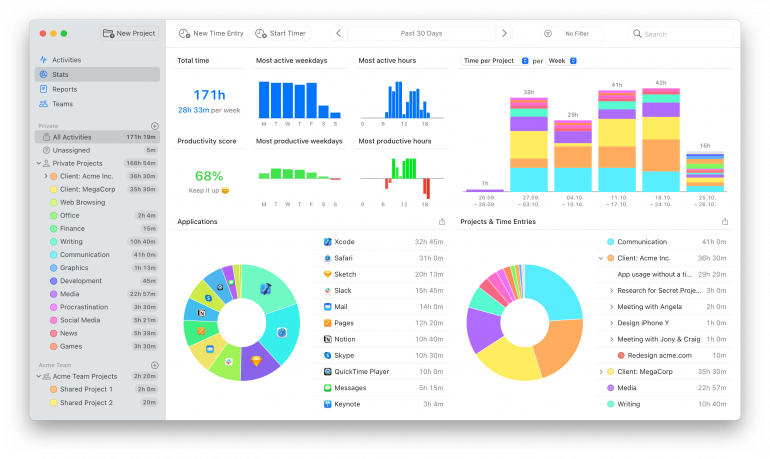
Of course, offices can also be distracting. If constant interruptions from colleagues throw you off your stride, find a quieter, more secluded place. Your managers should be understanding – after all, they benefit when you can work undisturbed.
Tip 4: Use a website blocker
If online shopping, games, or news are easily distracting, use an app that blocks such sites. The website blocker Focus helps you, for example, by temporarily blocking selected websites or applications.
Tip 5: Set goals
Those who feel overwhelmed by the abundance of tasks lose focus more quickly – and are more susceptible to distractions.
Set three to five achievable daily goals every morning. Remind yourself throughout the day – this will keep you on task and reduce interruptions.
Tip 6: Take short breaks
Breaks seem counterintuitive if you want to stay focused and get a lot done. But productivity can hardly be maintained without regular work breaks.
A 10- or 15-minute break provides the mental space and clarity to work faster and more efficiently afterwards. To do this, take a look at your productivity value in Timing: Recognize performance slumps – and schedule breaks specifically during these times.
Tip 7: Listen to music or wear noise-cancelling headphones
If some ambient noise helps your focus, find a suitable album or playlist. If you prefer to work in absolute silence, noise-canceling headphones will help against conversations, music, traffic noise and other sources of interference.
Tip 8: Use an automatic time tracking app
Often you don't even realize how distracted you actually are during working hours. Automatic time tracking in the background shows what you're working on – and how efficiently you're progressing.
Timing shows you exactly how much time you spend in different apps and websites – and provides the basis for evaluating whether that time is being used productively. This means that if you spend an hour in social networks in the middle of the day, it will appear in the "Activities" tab.
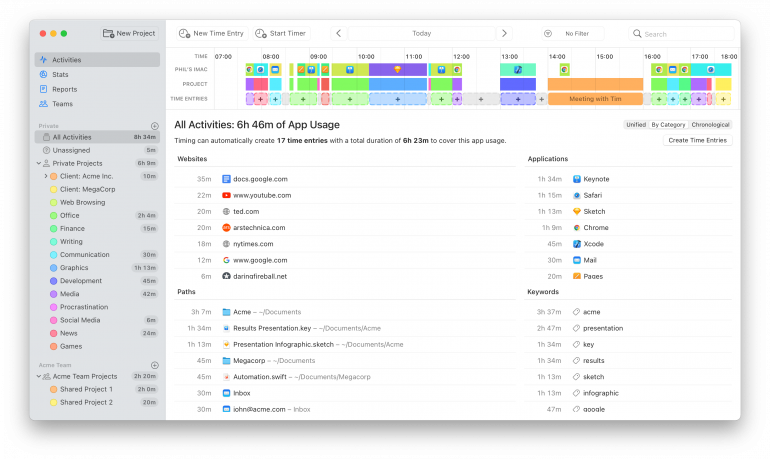
Such insights help you to recognize behavioral patterns – and to take targeted countermeasures. You'll also keep track of your time and take responsibility for how you spend your time.
If you suspect that your smartphone is one of your biggest distractions, take advantage of Timing's Screen Time integration. This way, the time spent on iPhone and iPad flows directly into timing. You can see how often you pick up your phone every day and which apps take up the most time. Is it work-related apps like Slack and email — or rather social media and news apps that suck up your productive energy?
Conclusion: Be less easily distracted
Turning off distractions takes time and patience. Over time, you will learn to avoid typical traps, find your rhythm – and do your work more efficiently.
The tips above will help with this. Get started with a free 30-day trial of Timing and watch distractions decrease and your productivity increase.
Why am I so easily distracted? Frequently Asked Questions
Why am I so easily distracted?
People are distracted for a variety of reasons – some internal, some external. Inner distractions are thoughts and feelings such as stress and anxiety, fatigue or hunger. External distractions come from the outside, such as technology, the work environment or background noise.
How do smartphones and digital media contribute to my distractions?
Technology can be a significant time-waster – whole hours seem to fly by in minutes. If your smartphone is a problem, keep track of your usage by integrating screen time with timing.
Why am I less focused at certain times of the day than at others?
We all have phases of the day when we are more productive. Some are most productive in the morning, others have their relapse in the late afternoon or evening. If you know your natural rhythms, you're more likely to work during times of maximum focus.
What strategies help to minimize distractions?
First, identify your distractions. If technology – such as smartphone, email or certain websites – is an issue, turn on airplane mode or install a website blocker. Automatic time tracking like timing helps to make distractions visible and to work in your focused phases.
Post a Comment for "Why am I so easily distracted? 8 tips for more focus"